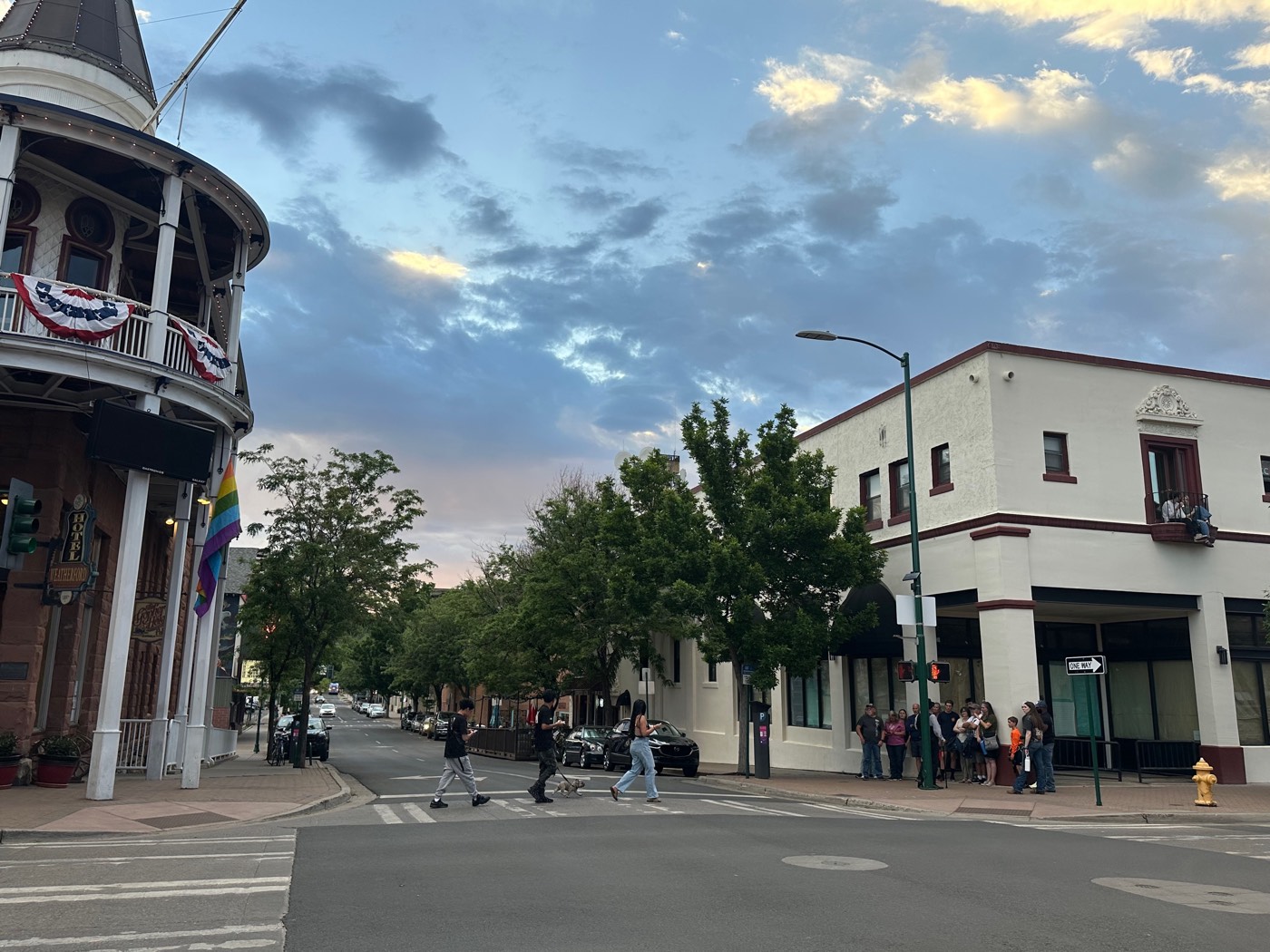
Opened New Year’s Day, 1900
Weatherford Hotel
A figure crosses the Zane Grey Ballroom floor and does not stop at the wall.
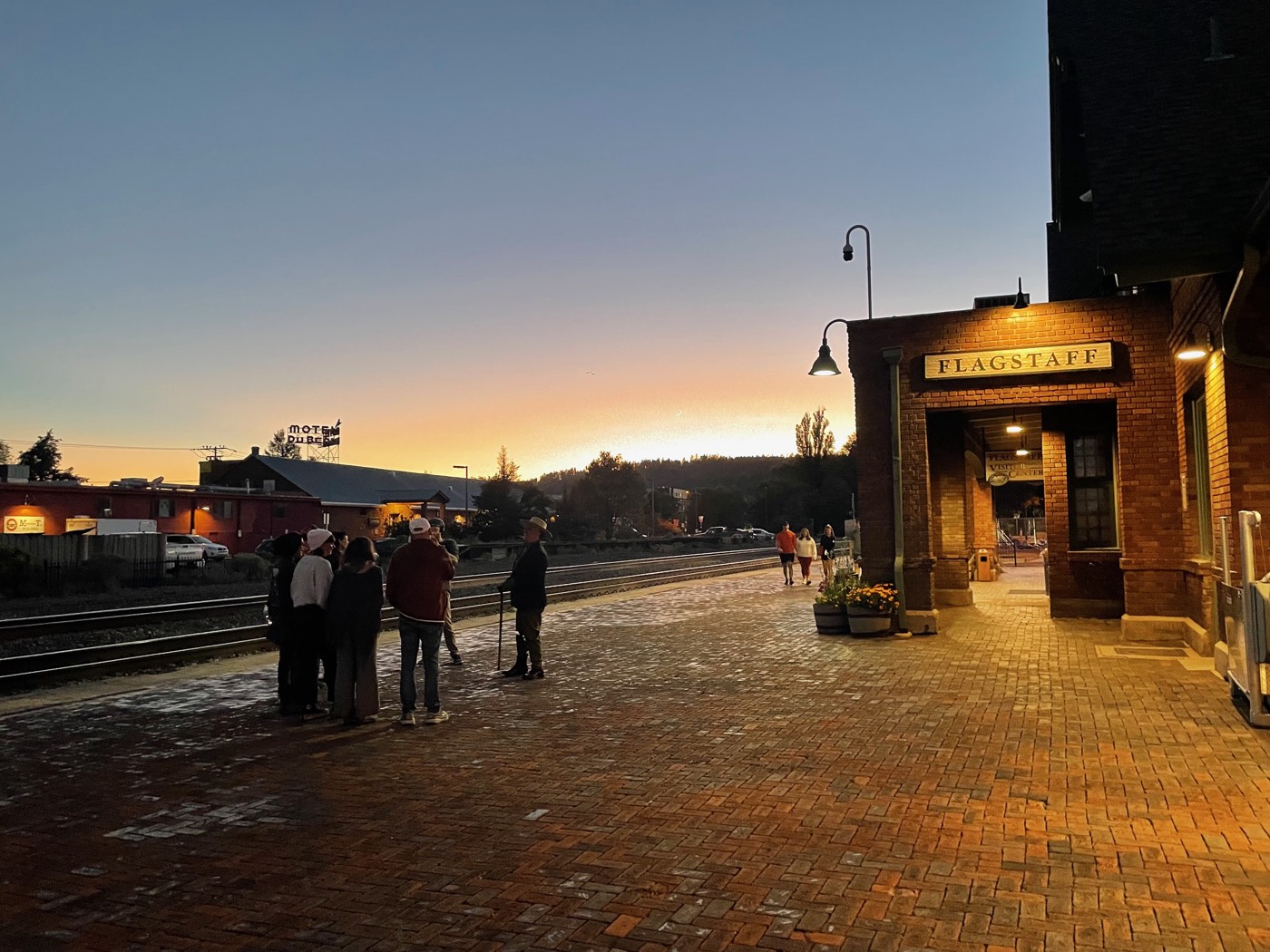
Built 1926, now the Flagstaff Visitor Center
Flagstaff exists because of the railroad. The tracks arrived in 1882 and the town grew up along them, and the red sandstone depot that still anchors downtown went up in 1926. Today it houses the Flagstaff Visitor Center, which means it is one of the few haunted places in this book you can walk into for free, seven days a week.
Railroading was dangerous work. The yards and crossings around the depot took lives for decades, including a brakeman crushed between boxcar couplings near the site in the depot’s early era. The men who worked the line did not always leave it.
Visitor Center staff have reported doors unlocking themselves and figures seen and heard after hours. The signature story is the phantom conductor, a uniformed figure still keeping schedule on a platform where the timetable ran out long ago.
Unlike the hotels, the depot’s stories come mostly from the people who work there, told reluctantly and usually after closing time. That is exactly the kind of account a historian can do something with.
The depot chapter of Haunted Flagstaff pairs the railroad dead of the town’s early record with what today’s staff describe, and lets you decide where one ends and the other begins.
Chicago“The Historic Train Depot, Flagstaff.” Haunted Flagstaff, the Book. https://hauntedflagstaffbook.com/haunted-places/train-depot.
APAHaunted Flagstaff, the Book. (2026). The Historic Train Depot, Flagstaff. https://hauntedflagstaffbook.com/haunted-places/train-depot
Citing the book itself? Edition details and ISBNs are on the buy page.
A figure crosses the Zane Grey Ballroom floor and does not stop at the wall.
The Grizzly Meat Man of Room 220, the rocking chair of 305, and the bellboy who knocks for no one.
The basement custodian who never turned in his keys.